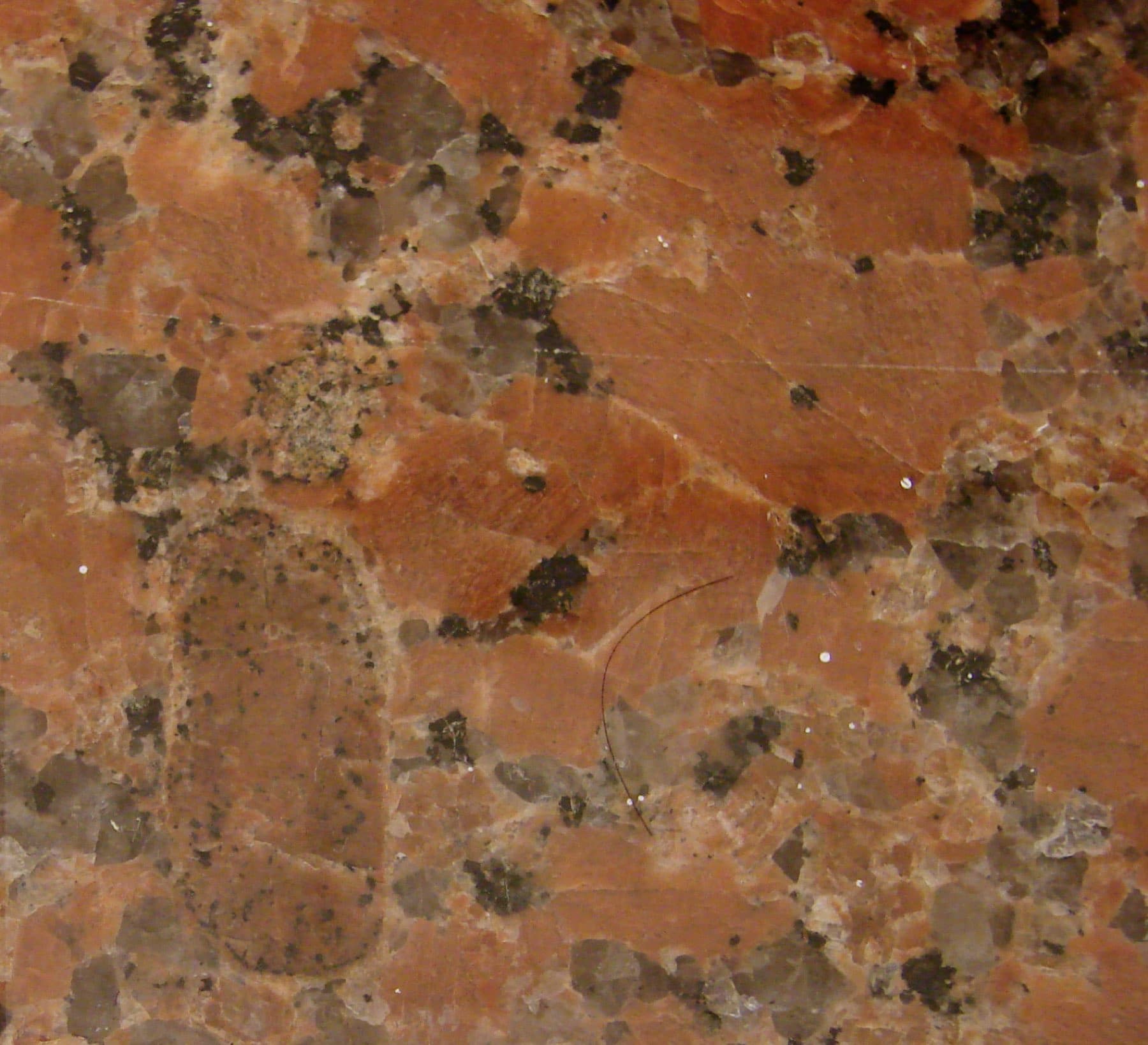
No laboratory issues a Declaration of Performance. The manufacturer does, over its own name, and it is that fact rather than any test result which catches sellers out when they first ship dimension stone into Europe.
Producers arrive expecting the European system to work like an inspection: send material to an approved institute, receive a certificate, attach the certificate to the container. It does not work that way. The testing is real and the numbers matter, but the document that travels with the goods is your own declaration about your own product, and you are answerable for it. Understanding that changes what a quarry should be testing, and how often.
Which standard applies to which product
The first thing to establish on any enquiry is not the stone. It is the end use, because the harmonised standard follows the product rather than the material.
| Product | Harmonised standard | | --- | --- | | Cladding slabs | EN 1469 | | Modular tiles | EN 12057 | | Floor and stair slabs | EN 12058 | | External paving slabs | EN 1341 | | Setts | EN 1342 | | Kerbs | EN 1343 |
The same block from the same bench can go out under three of those standards in a single month, declared differently each time. A buyer asking whether your granite is "CE compliant" has asked an incomplete question, and the correct response is to ask what the material is being installed as. We have watched enquiries stall for weeks because neither side realised they were discussing different documents.
What the manufacturer is actually declaring
Assessment and Verification of Constancy of Performance for these products runs under System 3 or System 4, and which one applies is set per standard rather than per material. The external paving standards, EN 1341, EN 1342 and EN 1343, run under System 4. Cladding, modular tiles and slabs for floors and stairs, EN 1469, EN 12057 and EN 12058, sit at System 3 or 4 depending on the declared characteristic, and reaction to fire is the usual reason a product moves up. Check the ZA table in the standard you are actually shipping under. The distinction between the two systems matters less, for present purposes, than what they have in common: under both, the Declaration of Performance is issued by the manufacturer, in accordance with Annex ZA of the relevant standard.
Read the name of the framework again, because it is unusually literal. Constancy of performance. Not adequacy of performance, and not excellence of performance. The system is built to establish that the values you declare are the values your material will keep delivering, consignment after consignment.
That is why there is no universal minimum to clear. The standards tell you which characteristics must be declared and by which test method they are determined. They largely do not tell you what number is good enough, because that judgement belongs to the specifier designing the facade or the pavement, who reads your declared values and decides whether the stone suits the application. Your obligation is to declare accurately and consistently. The architect's obligation is to select.
Why this changes how a quarry samples
Follow that through to the working face and the consequence is uncomfortable.
If the requirement were a pass mark, the rational strategy would be to test your best material and clear the bar. Because the requirement is a declared value you must keep meeting, the rational strategy is close to the opposite: test across the variation in your deposit, including the benches you are least confident about, and declare a value you can stand behind on a bad week.
A quarry is not homogeneous. Absorption shifts with proximity to a joint set. Strength shifts across a bedding change. A single test on a single well chosen block produces a flattering number and a fragile declaration, because the declaration is a standing statement about everything you will ship under it, not a description of the sample you sent to the lab.
We offer the following as our own field observation rather than as a sourced statistic, because we have not found authoritative published data on what first time exporters fail on. The problems we see are rarely a stone that cannot perform. They are a producer who declared from one test on one good block, and then shipped from a different part of the quarry.
A physically excellent stone can still fail commercially
This is the point that is hardest to accept and most expensive to learn late.
A deposit can be genuinely fine material, better than what a competitor is selling into the same project, and still be unusable to a European buyer, because its performance varies bench to bench and the declaration therefore cannot be relied on. The buyer is not rejecting the rock. The buyer is rejecting a document it cannot build a specification on.
The reverse holds too, and it is the more encouraging half. A modest stone with tightly characterised, consistently reproduced properties is entirely sellable, because the specifier can design around known values. Consistency is a commercial asset in its own right, independent of quality, and one of the few in this trade that can be created by process rather than bought.
The regulation changed in January 2026
The framework around all of this has been replaced. Regulation (EU) 2024/3110, the new Construction Products Regulation, supersedes Regulation 305/2011. Most of its provisions have applied since 8 January 2026. Penalties and the enforcement of environmental declaration requirements apply from 8 January 2027.
The practical near term effect on a stone exporter is smaller than the change in instrument suggests, and the reason is worth knowing. Existing harmonised standards remain valid until they are revised, and the provisions of the outgoing Construction Products Regulation continue to apply in parallel until 2040. EN 1469 and the others in the table above are not being withdrawn next year. You will be working to the standards you already know for a long time, under a regulation with a new number.
What we would watch is the second date. Environmental declaration enforcement arriving in January 2027 lands in the same place as every other data request currently reaching quarries from Europe, and it will be your buyer asking, because your buyer is the one placing product on the market.
The American route runs on a different logic
If your material is also going to the United States, the system inverts. There, the material standards are specification documents: ASTM C615 for granite, C503 for marble, C568 for limestone and C616 for quartz based stone. The test methods sit separately, in C97 for absorption and density, C99 for modulus of rupture, C170 for compressive strength and C880 for flexural strength.
We are deliberately not printing threshold figures from C615 or its companions. Those standards are paywalled, we have not been able to verify the numeric pass values against the current published texts, and a threshold quoted from memory or from a secondary source is precisely the kind of number that gets a container rejected on arrival. Buy the standard, or have a laboratory that holds it tell you where your material sits.
What can be said without the numbers is what each test is asking. C97 measures how much water the stone takes up and how dense it is, which speaks to durability, staining and behaviour in freeze thaw. C99 measures modulus of rupture, the bending strength of a specimen under load. C170 measures compressive strength, the resistance to crushing. C880 measures flexural strength, which is what governs a slab held on anchors at its edges. That last one is why cladding is the demanding application: a facade panel is not resting on anything.
None of this is legal advice, and nothing here substitutes for the standards themselves, which are the only authority on their own contents.
Where the two systems meet
The differing philosophies produce one practical convergence. Whether you are declaring values under EN 1469 or positioning material against ASTM C615, the underlying work is the same: characterise your deposit properly, across its variation, before a buyer forces you to.
The quarry that has done that arrives at a negotiation with a range and an explanation for the range. The quarry that has not arrives with one test result and a hope that the buyer takes it. Only one of those two is selling a product. The other is selling a sample, and finding out which it was in the fourth container is the most expensive way to learn.